
A cottage on the River Soar
What was there
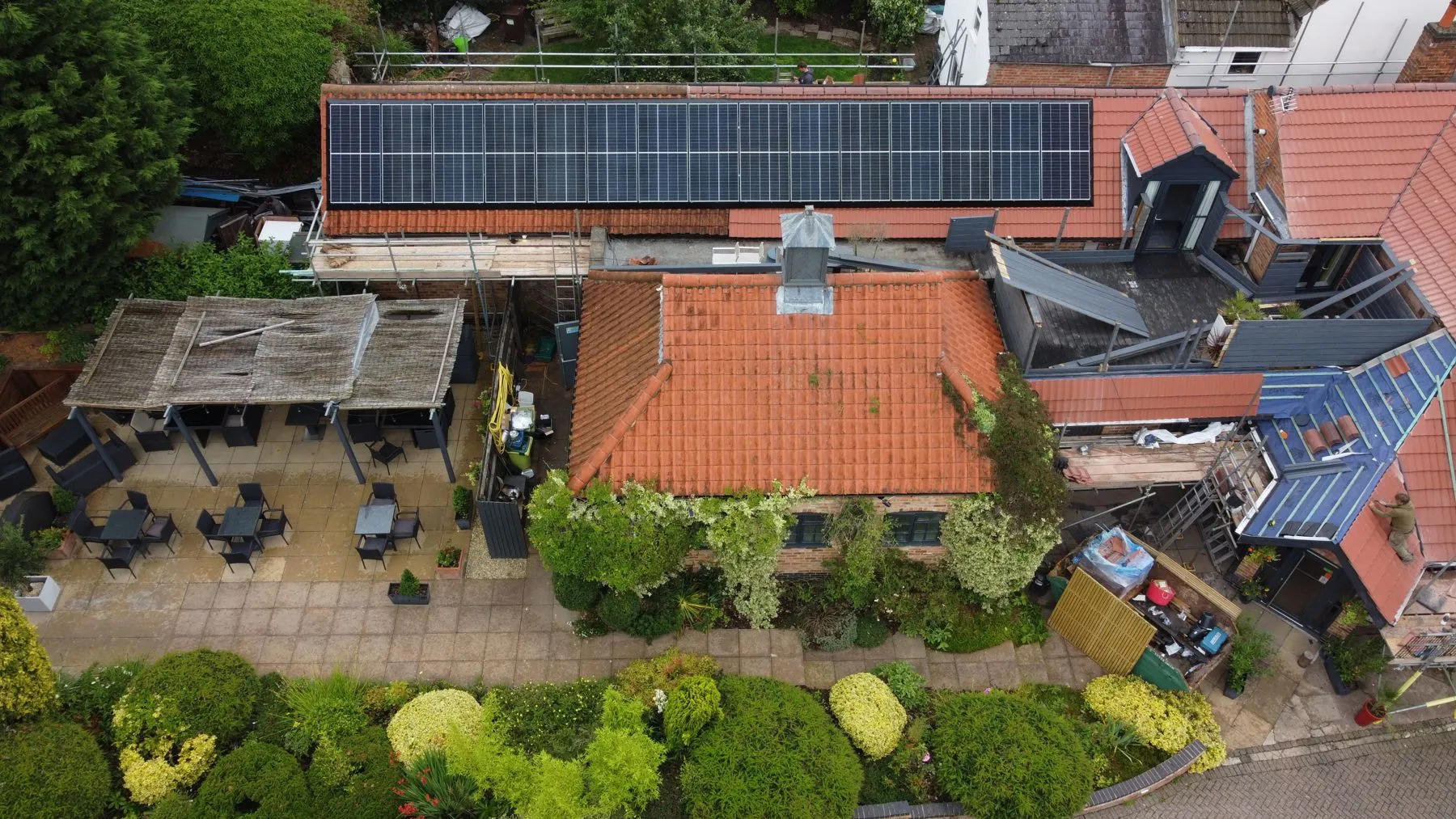
A stone lock keeper's cottage beside the River Soar, with a dormer in the roof and a tall chimney. The brief was simple: make power, store it, and charge a car from it.
What we did
18 premium all-black panels went up, 8.55 kWp in all: 12 on the main roof, set out around the dormer and the chimney, and six more on the lower roofs. In the outbuilding, an 8 kW Sigenergy inverter and two Sigenergy batteries, 8.06 kWh and 9.04 kWh, giving 17.1 kWh of storage. On the wall outside, a Sigenergy gateway with a backup supply, and a 7 kW Sigenergy EV charger by the drive. A new consumer unit finished the job. It was switched on at the end of August 2025.
How it's doing
Our proposal estimated 6,766 kWh a year. In its first full 12 months, September 2025 to August 2026, the system generated about 7,590 kWh. That's 12% more than we said it would. Since switch-on, 82% of the electricity the home used has come from the panels or the battery, and under 18% was bought straight from the grid. 6.61 MWh has gone back to the grid, and 1.42 MWh into the car. The battery also tops up from the grid, so not all of that 82% started as sunshine.
more about our solar work in the Charnwood villages →Figures from the system's own Sigenergy monitoring on 6 October 2026. The 12 months are 1 September 2025 to 31 August 2026, added up from the app's monthly totals. The other figures run from switch-on on 29 August 2025 to 6 October 2026.
Want to see what your own roof could do?
Send us a year of bills and we'll tell you honestly whether solar stacks up.
★★★★★ 5.0 from over 120 Google reviews →